dimanche 24 septembre 2017


8

Why Do People Invest in American Eagle Silver Coins?

Updated on July 29, 2017
john000 profile image
John has been gold prospecting for six years, mainly in the Bradshaw Mountains, Yavapai, Arizona.
The American Eagle is, in my opinion, the most beautiful silver coin in the world. It is the most commonly purchased of all silver coins in the world.
The United States Mint at West Point struck 25,480,500 silver American Eagles for the year 2010 as of September 30, 2010. The 2009 production stood at 30,459,000 American Silver Eagles. So, as you can see, these are popular bullion coins!
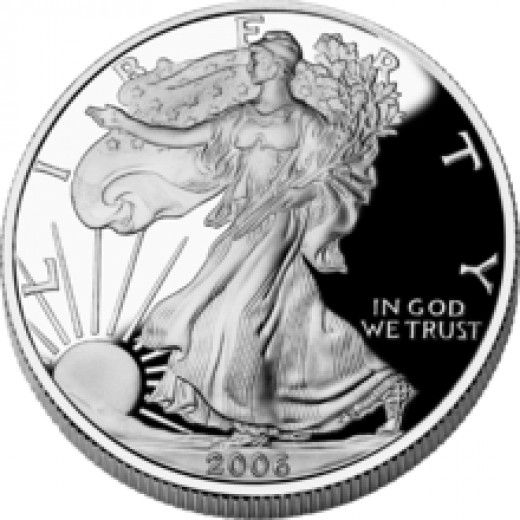
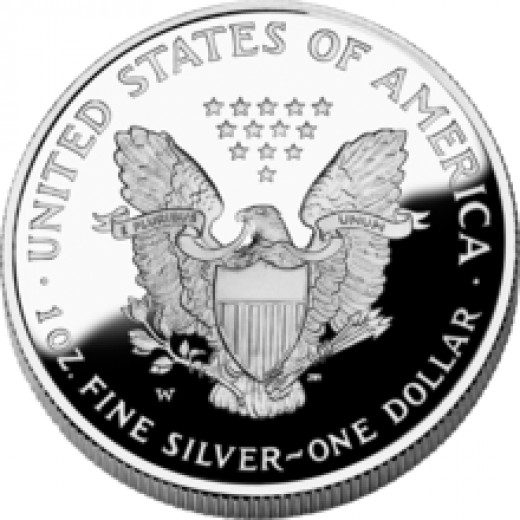
The Silver Eagle is marked one dollar, but its 0.999 pure troy ounce of silver is worth much more. The front sports Walking Liberty, an engraving famous throughout the world by Adolph A. Weinman and the back features John Mercanti’s powerful heraldic eagle with thirteen stars. Go ahead, compare it to pictures of other one-ounce silver coins. I bet you will agree it is in its own class.
Source

Why Silver and Why American Silver Eagles?

There are many reasons for the popularity of silver as an investment, and American Silver Eagles in particular.
1. One reason is that with the economies of the world (for the most part) struggling, people are looking for a "safe haven" for their earnings. Paper currency can lose its luster. During hard times, if worse were to come to worse, people could trade precious metal for goods and services. The recent threat of depression has increased that desire, hence the great popularity of the Eagle coins this year. These individuals feel more secure holding silver in case the economy suffers a big drop again and paper currency becomes devalued. Others, who don't have such a pessimistic outlook on things, like to hold a little silver for other reasons. Perhaps the government would call a "bank holiday" and people would not be able to access funds for a short period of time. In that case, silver dollar coins would be accepted as money in an emergency.
Still yet, the response to the downward spiral in economies has been universal. Central banks around the world have decided to lower interest rates in an attempt to stimulate their markets. They have also entered into agreements to purchase bonds (private and public) to prevent a free fall in their value, but the purchases have essentially resulted in the creating of more currency, either in physical form or as computer entries. "Quantitative easing" is the jargon used to describe such actions.
"Easing" has the side effect of drying up many investment options whose yields drop dramatically. Many average Americans who took a beating in the stock market crash and who are not inspired by the market these days (daily volume in the markets is way down) look at precious metals (gold and silver) as their only place to put new money. So, this is merely another way for people to look at eagles as a hedge investment. Note: precious metal bubbles can pop, and it is possible that these people would actually lose money on their silver if metal prices went down.
2. There is also great fear that an increase in the money supply will decrease the dollar's value and hence encourage inflation. When too many dollars in circulation and a growing economy put pressure on suppliers, they raise prices and we get inflation (rising prices). This results in the average citizen being able to purchase less with his money. Wages have always lagged behind price increases. Spiraling inflation (Germany and Argentina, for example) can leave citizens with far less effective money. So, with this scenario in mind, individuals buy American Silver Eagles as a storehouse of value, something that can keep up with inflation.
It may seem strange, but we have people of two minds in these days of less stable markets: those wanting a defense against inflation and those who are looking for any investment alternative to the stock and bond market with a decent return. Silver Eagles make them both smile.
Since precious metal can be produced (mined) at a rate within limits, and there is a finite amount available at any particular moment (you can't print silver), it has the unique characteristic of being able to rise with inflation, or even increase in value beyond the rate of inflation.
3. There is a third group of people who fear deflation. With deflation, assets that have bubbled higher, beyond reason, go down in price. We have seen this in stocks, bonds, derivatives (bundles of mortgages, insurance against lost value in bonds, etc), and real estate. But the asset classes that can be manipulated higher in value appear to be disappearing. Still, gold and silver hold their luster, with most analysts shouting that based on economic growth and the value of the dollar, gold could go up two times its present value, and silver up to fifteen times. Who knows? But a lot of people agree with this view and are stepping up their purchases of Eagles.
In recent years, efforts have been made by central bankers to keep down the price of gold and silver. One way to do this is to periodically sell huge quantities from their treasuries. Supply determines demand. If a lot of silver is available, price goes down. But this is a temporary way to keep its value down.
Source
4. Some want silver as a hedge against a complete failure of the currency system. In a deflationary crisis where individuals, businesses, and governments go bankrupt, silver again has value as money. It can be traded for goods and services. So this marks a fourth group. They are convinced that U.S. currency will become TOTALLY worthless due to a collapse of the capitalist market system. To them it is better to have silver for barter than paper bills. Others argue that food or ammunition would be the prime source of value under such circumstances. But that is for another article.
5. A fifth category of person buys American Silver Eagles: collectors. There are some Eagles in various conditions that are worth a great deal of money for numismatic (as collector pieces) reasons. Collectors bid the prices up. An example would be a 1988-S Silver Eagle in a high grade of condition that can go for $500, 1997-P for $152, or 1998-P for $450. There are many more examples of other Silver Eagles appreciating much more highly than bullion Eagles (Eagles whose value is solely related to silver content).
6. LIke me, many appreciate American Silver Eagles because of their beauty. If you would like to give a person a super gift, a Silver Eagle can be perfect. The shine on an Eagle is a lovely thing to behold, and at present prices for bullion, an individual can purchase one on Ebay, at best, for around $26. I especially like to give them to children in the family (in the care of their parents until ready to be shown again). It is something that will always have value, and the way things are going, there is a good chance it will be worth more than $26 in their lifetime. Someday it may come in handy for them. What could be better than knowing someday a nephew might say, "I got that from Uncle John when I was ten years old." In fact, American Silver Eagles make nice presents for anyone if you know them well. Now, that is not all I give for presents, but one for each child is appropriate for me. Luckily? we have a small family :) .
Silver Eagles come in plastic holders, either cases or small envelopes, to keep them in un-circulated condition. There's nothing worse than seeing an Eagle with fingerprints all over it. If you get a mint tube of twenty from an authorized dealer or bank, the coins can be removed and placed in cases before delivery. All coin shops carry them. Warning: twenty Eagles will run around $520 at current rates. Ouch!! I find buying Eagles on Ebay is very convenient and if you watch the auction you can get the Eagles for a few dollars over spot price. You need to know what you are doing; it's especially important to look at a seller's feedback. If this sounds too risky, just go to your local coin store - some jewelry stores and pawn shops have them, too.
So here you have read about 6 reasons people buy American Silver Eagle coins. All of the reasons have "security" as an underlying theme. If you have a reason for wanting to gather a few, dollar cost averaging is a good way to go. All this means is that you buy a coin periodically, say, every 3 months, over a long time, buying at highs and lows, with your average price giving you a great chance of making a nice profit someday.
If you aren't interested in saving silver, that's OK too. There are plenty of arguments out there for not hoarding precious metal. But there is one thing there isn't a lot of argument about. It will be a long time before a silver coin is designed that is more beautiful than the American Silver Eagle.

1804 Liberty Silver Dollar

This image or file is a work of a Smithsonian Institution employee, taken or made as part of that person's official duties. As a work of the U.S. federal government, the image is in the public domain.
This image or file is a work of a Smithsonian Institution employee, taken or made as part of that person's official duties. As a work of the U.S. federal government, the image is in the public domain. | Source

Whom do you buy silver dollars from?

See results

Buy a Silver Dollar for 99 Cents

© 2010 John R Wilsdon

COMMENTS

    Post Comment

    • john000 profile image
      Author
      John R Wilsdon 2 years ago from Superior, Arizona
      Yep, as long as the world values it, it can be spent. Thanks for the comment.
    • Blackspaniel1 profile image
      Blackspaniel1 2 years ago 
      I like to think of precious metals as a worldwide currency.
    • john000 profile image
      Author
      John R Wilsdon 6 years ago from Superior, Arizona
      GNelson, I agree. It would be difficult to produce a more enticing coin.
    • GNelson profile image
      GNelson 6 years ago from Florida
      I wish I had more of these coins. They have great look and feel.
    • profile image
      herb 6 years ago 
      Excellent article. Silver Eagles can be the common man's vehicle to prosperity
    • profile image
      M.C. 6 years ago 
      Agree that the silver Eagle really is beautiful!! Silver really is more precious than gold.
    • john000 profile image
      Author
      John R Wilsdon 6 years ago from Superior, Arizona
      Jeremey
      Thanks for the comment. You are probably right about the future of precious metal. My feeling is if you put a little away, how can it hurt? These are rapidly changing times we live in, and I must say that the last few years of financial disclosures have left me shaking my head in disbelief.
      Take care-
    • Jeremey profile image
      Jeremey 6 years ago from Arizona
      I myself had a similar hub, not as well presented as this but with a somewhat different main idea. Great topic to bring awareness to! Silver value is the fastest rising and most overlooked form of wealth and currency in the world but notice is being made of late! The value of silver is up something like 70% in recent times and with the spiralling economics worldwide precious metals are going to be of great value and maybe even a "survival" tool if worse goes to worst!

    The Potential Use of Silver Coins as Bullion During Times of Hyperinflation

    Been gold prospecting for 6 years, mainly in the Bradshaw Mountains, Yavapai, Arizona. Found over 7 grams of placer. Loves Black Canyon.

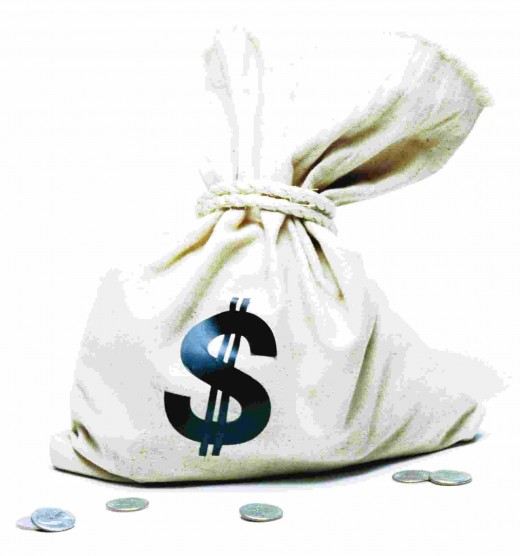
    A Bag of Pre-1965 U.S. Silver Coins (Junk90)

    Precious metals seem to be on the minds of many people today. With a recession that doesn't seem to reverse itself, and fears of an inflationary depression ahead, people are looking for a hedge to preserve the value of their "money". Silver has historically been used since ancient times as money, and was chosen because of its scarcity. But what is the rationale behind holding and buying silver; how would silver be used as money?
    I am certainly not a mind reader, and nobody is going to predict a future economic blowout or collapse with perfect certainty, but history and some "common sense" might give us a useful scenario for planning. So what do you want to think about when (and if) you decide the country is heading down the road to a German type hyper-inflation (1914 - 1923)?
    If you think there is a good reason for precious metals, silver bullion more specifically here, to be rising in value on the spot market and if you think it is a safe bet that the reason is a trend, you might want to buy silver. The spot market or cash market, by the way, is a public financial market, in which financial instruments or commodities are traded for immediate delivery.

    Why Silver?

    And why buy silver, and not gold, during a hyper-inflation? You might want a little of both, but the average guy is probably better off focusing on silver. Here follows my explanation of a preference for silver.
    With gold hovering around $1413 an ounce, using it as money might be a little difficult. Suppose we as a nation get to the point where grocery store owners are willing to take gold or silver, in addition to cash (early part of an inflationary spiral), in return for food. If you buy 3 cans of vegetables and a steak valued at $28 in currency and present him with a one ounce gold eagle coin, he will have to give you change. At today's prices (and probably more in the future) the grocer must give you back on the order of $1385. That can be problematic.
    Well then, you say, why not give him a 1/10 oz or 1/4 oz gold coin. This is still a bit of a problem. 1/10 oz of gold is about $140. It is a little easier to handle, but perhaps a problem since most of his customers are still using currency that is inflating. He needs to maintain cash levels to deal with his customers.
    It would probably be easiest if you have familiar U.S. silver coins and U.S. gold eagle coins, since anything else would be nerve wracking for him to accept. Will grocers have gold test kits to prove purity of the gold? Will someone in a back room be looking at the spot price of gold, as precious metal dealers do? There are gold testers that will determine from 6k to 24k purity. That and the weight of the coin should enable you to to tell how much gold is in the coin. Incidentally, pure gold is 24.24 karat. Perhaps testing is something that would happen later as the spiral develops to a point where daily value is very unpredictable.
    The other issue that would come up (in my make-believe mind set) is the simple appearances of what is exchanged. A 1/10 oz gold piece is: diameter -16.50 mm, thickness- 1.19 mm, gross weight - 0.1091 troy oz (3.393 g), and face value - $5. This is about 0.64 inches in diameter. Here the grocer is exchanging something of intrinsic value for something of very small size with intrinsic value. Bartering with gold may make a retailer nervous; he would be receiving a coin not much more than half an inch in diameter. Just sayin'.
    Another reason for buying silver is that it has many more industrial uses than gold. In fact, every year most of the silver produced from mining is used for manufacturing purposes, for catalytic converters, electronic and thermal conductivity, its ability to reflect light, and its ability to withstand extreme temperature changes. Its usefulness in the sectors of jewelry, industry, and photography are why 95% of the silver produced does not go into bullion. It is therefore a metal more useful than gold. In my opinion, this will keep silver a highly desired precious metal.

    How Silver Coins Could Be Used for Bartering

    These two reasons that gold might be awkward to use leave me with an alternative that has more commonly been used as money (money in my pocket type of money), silver. The Greeks, Romans, Spanish, and American colonists used silver coins for money. With the value of gold to silver historically being in a ratio of 15:1, the smaller value, I think, would make it easier for purchasing and making change.
    So for this reason, I would prefer to own American silver eagle coins if I thought we might experience an unfolding inflationary spiral. In the past, silver has been referred to as the poorman's gold. It is more practical for the ordinary citizen. At today's silver prices (maybe more tomorrow) the silver eagle could buy $29.38 worth of stuff. In our previous example, change of $1.38 could be made in cash or small silver coins.
    In addition to silver eagles, we have more silver bullion coins that would be useful. They are recognizable to everyone in this country and are made with 90% silver. Pre-1965 Franklin halves, Washington quarters, Standing Liberty quarters, Roosevelt and Mercury dimes, and other coins made with silver and engraved, just as our coins today with copper centers, it would seem, would be very acceptable. The only difference would be that the value of the American silver coins would be based on a silver content of 90% of the weight of the coins. Silver quarters would be worth more than 25 cents apiece. I think that charts with the silver weights of the various U.S. coins would be quickly drawn up and posted the way tax charts used to be posted on cash registers. Actually, modern cash transaction machines might have the weights programmed in, with a variable, the silver spot price, accessed electronically and used for calculating change.
    For this reason, I think storing pre-1965 silver coins, or "junk silver coins" or "junk90", would be a good idea. A "bag" of these coins can have a face value of $1000. I have seen other bags with a face value of $750. It would seem the "bag" may vary from dealer to dealer, so make sure you know the face value of the coins in the bag. Junk90's true value varies with the price of silver. In other words, that $1000 bag of silver coins is worth more than $1000. The face values of the coins in the bag add up to $1000. Fractions of a bag have lower face values. These bags are easily traded throughout the world today.
    You might not have to access the silver eagles for quite some time into the spiral. One would have to realize that as cash became worth less, prices would go up at an increasing rate. The need for a silver eagle to buy 3 cans of vegetables and a steak might not be necessary until later in an inflationary spiral.
    Silver can also be purchased in rounds and small ingots (silver bars) that have their purity stamped. For instance 92.5 (%) stamped is the purity of sterling silver. But then we get back to the problem of ease of acceptance. It is not unknown for people to stamp bullion and jewelry incorrectly in order to cheat someone out of more money. An engraved American silver coin, familiar to most people and dated pre-1965, would engender more trust in a transaction at a store. I believe a businessman would be less likely to even consider accepting jewelry, ingots, or silver rounds over silver eagles or junk90 coins.
    For those people who are wealthy, buying a stash of gold coins is probably not unwise. It can preserve wealth. But ALL classes of people, especially middle class, who believe that a hyper-inflationary cycle is likely to occur, should be concerned with silver accumulation. How much is accumulated is based on the anticipated beginning of an inflationary spiral. If you strongly believe that such a spiral is imminent, buying hundreds of dollars of silver is not unreasonable. If you think from now until your anticipated hyper-inflation you have years to invest, perhaps as little as 1 ounce a month would be appropriate. This question of timing is only based on your individual prognostication, and that will in turn be mainly based on READING.
    Notice that in the discussion above, I looked at the use of silver mainly and gold as money, the storehouse of value that a community would possibly accept as tradeable. Something of value has to be traded for something else of value. Cash will have decreased in value systematically over time and, perhaps, come to be worthless and impractical, much like the case in the German hyper-inflation. To give a specific example, I read that during the final stages of the German hyper-inflation, a person could go into a cafe and order a cup of coffee for one million German marks. By the time he had finished his coffee, if he decided to have a second cup, it was two million German marks. A customer, feeling enraged, was instructed that if he wanted 2 cups of coffee, he should order them at the same time! But anticipating what will be valuable is a bit of a trick.


    Pondering the Unthinkable

    Some people are of the viewpoint that food should be the asset accumulated in preparation for terrible inflation. Others suggest that guns should be hoarded, as they would become very precious during such a period. Some feel ammunition should be collected and stored. Some believe that all of these things should be hoarded in order to deal with a severe economic downturn. Others believe other things for survival will become media for trade and become much more important than U.S.silver coins.
    I don't know what will become most important. The focus of this article is the way silver might be used as money. The use of other things to barter is for another article. Pondering the unthinkable is very strenuous work - and not very pleasant. A segment of the population will have reasons for believing an alternate reality will exist under the duress of hyper-inflation, and that segment must come to terms with its belief.

    Where to Find Money on the Street and at Home

    Savvymumma profile image
    Savvymumma 
     more
    Contact Author
    Source
    You won't get rich finding money on the ground, but it can be a nice surprise. Found money is money you didn't have to work for! Here's some good places to look and some tips to help you.

    Where to Find Money

    1. Phone booths. Even though most people use phone cards, have mobiles or reverse charge the calls, you can still find money on the ground near as booth or by checking where the change comes out. Push the return button, some money might pop out.
    2. Vending machines. Check the change slot, under the machine, even on top of the machine. You can check the top really casually by putting your hand up there after you make your selection and then "wipe" it across the top to bring your hand back down to get your purchase. Or just check them when no one is looking if you are embarrassed. Again, when you are checking push the change button, or cancel button and some coins might come out.
    3. Drive-thrus. When paying for their burger, if someone drops their change very rarely will they get out and pick it up to pay. There is too much pressure from the cars behind to keep moving and no one wants to be the one to hold up the line. Most drive-thru places have cottoned on to this. My sister told me that when she worked drive-thru, if someone dropped their change, after they had gone, she had to go out and pick it up, the company made her. So obviously if a company makes it protocol, it happens A lot!
    4. DIY car washes. When people are cleaning out their cars, coins can fall out. Sometimes people just throw them out with their rubbish without thinking. Check it next time you are going through one.
    5. Bus stops. Again, people drop their change and with the pressure to keep the line moving and not hold up the bus, they will just get on and not worry about it.
    6. Gutters. Change falls out of pockets, bags, and cars as people get in and out of their car, or when people are walking along, and it often falls into the gutter. I have found lots of coins laying in gutters.
    7. Check-outs. People drop money and do not want to pick it up. If you are too embarrassed to check, you could casually drop something and have a look when you bend down to pick it up. Sure, if you go to the same shopping centre all the time and do this every time you go through, the operators will think you're a klutz, but hey, free money!
    8. Anywhere money is exchanged. If money is changing hands, at one point some of it will drop. Taxi ranks, bus stops and check-outs are all perfect examples of this.
    9. Parks and playgrounds. Parents can drop money when the ice-cream van comes and their kid wants an ice-cream, or when they get things out of the nappy bag coins might fall out. Kids playing on the equipment might lose the change in their pockets. Next time you take your kids to the park, have a look around.
    10. On the street. When you are crossing the road, glance around. People drop money all the time and if they are in a hurry or a car is coming, they will not stop to pick it up.
    11. Train stations. Check the automatic ticket machines for change; look on the ground where people buy tickets and on the platform. If you are running late to catch a train you are not going to stop to pick up the 50c you dropped and someone else will be lucky enough to get it.
    12. Car parks. There are so many people getting in and out of cars in a car park that the chances of find lost coins are higher than many other areas. Keep an eye out next time you are in one and you might be surprised.
    13. Self-pay checkouts. People drop money behind the bags, forget to check the change slot, drop coins on the ground. Check everywhere when you use them because you just never know.
    14. Any self-pay machine. These are becoming more and more common and the great thing is not everyone collects their change. Also, if they are in a busy area, if people drop their coins under or around the machine, they are likely to just grab more from their pocket or wallet rather than hold up the link looking for the dropped money.
    15. Lounges and seats in waiting areas. Coins can get stuck in the cracks after falling out of pockets. I always find money in my lounge at home, so why not look everywhere else?
    16. Laundromats. If you use them, check the machines before you do a load. People grab their clothes, but may not realise they had money in their pockets that went through the wash.
    17. Taxi back seat or bus seats. ALWAYS check them. Also if you are sitting up the back of the bus, check behind the seat. One of my friend's brothers did this every time he got on the bus, one time he found a $180 pair of sunglasses in perfect condition, other times money, toys, cigarette packets (full or close too, none of us smoke though). It is amazing what you can find.
    18. Public toilets. I don't recommend crawling around on the floor looking for money, but glance on the ground and you might be surprised.
    19. On the ground after any sporting event or concert. People buy food there and drop their money. There is such a mass number of people that your chances of finding something are above average.
    20. Anywhere you can walk. If you can walk there, someone else has, so they might have dropped something. Always look around on the ground when you are walking.
    21. Park benches. Benches in public areas where people sit can often have a few coins underneath. People sit and the coins fall out o their pockets or they get something out of their bag and change falls out.
    22. Cars. If you happen to test drive a car, check the seats and anywhere you can. Same goes for if you hire a car. Yes, they detail them, but you might get lucky.
    23. At the beach. I don't mean pick through peoples things, but look in the sand. Get a metal detector if you want. Considering how little people wear to the beach, the size of the bags we take and how much stuff we have it is very easy to lose money and not know it. Plus, it can sink in the sand so not even be visible.

    Finding Money in and Around Your House

    There is usually lots of money to be found in and around your house. Check these spots:
    1. The washing machine and dryer, especially the lint catcher. Hardly anyone checks their pockets before putting things in the wash.
    2. Every item of clothing in your closet. Check the pockets, check shoes, everywhere. You may have put some change in your pocket and forgotten to take it out when you hung up your jacket.
    3. Handbags, back packs, overnight bags, every bag and purse you have. There might be a little rip in the lining which has meant coins could slip through into the middle of the bag.
    4. Under lounges and under or in between the cushions. It is so easy for money to slip out of your pocket when you sit on the lounge.
    5. Under any appliance. You or someone else may have dropped some coins and they rolled under the fridge. You might have placed some notes next to the TV and they slid under it. I once put $50 on my desk then could not find it for the life of me. A few weeks later I picked up my stereo to move it and there it was!
    6. Under the bed. How often do things roll under the bed or work their way under there and you plan on getting them later, but they just sit there? Later is now, check it.
    7. Your car. If you have one, check all the seats, under and in the cracks. Check the boot, under the spare tyre, every nook and cranny. The little rubbish bins and pockets in your car, the glove department, everywhere! Every time I have bought a car, I have found money in it.

    A few final tips

    If you can walk somewhere, do it. Not only is it good for your health but you have a higher chance of finding money. If you happen to see 20 cents on the road when you are driving you are not going to stop the car to pick it up are you? You are also not likely to see anything. If you walk everywhere, you see more and are more likely to be able to pick up money.
    If you are one of those people who go for a run or walk daily can you vary your route to go through a car park or something to enable you to glance on the ground for money?
    Always check the machines. Don’t be too embarrassed about it.